| Related Facts |
|
Most recruits previous to 1940 were issued a fatigue uniform called Drillichanzug (or Drillich) in basic training. |
|
|
Drillich fatigues were kept for work details, weapons cleaning, and other duties likely to soil clothes. Made of Herringbone Twill (HBT), the uniform was undyed and therefore the color ranged from white to oatmeal to cement grey. |
|
|
On 12 February, 1940 the color of Drillich was ordered changed to a bluish green called 'reed-green'. |
|
|
Chemical warfare (CW) involves using the toxic properties of chemical substances as weapons. |
|
|
The first instance of large-scale use of gas as a weapon was on 31 January 1915, when Germany fired 18,000 artillery shells containing liquid xylyl bromide tear gas on Russian positions during the Battle of Bolimov. Instead of vaporizing, the chemical froze and failed to have the desired effect. |
|
|
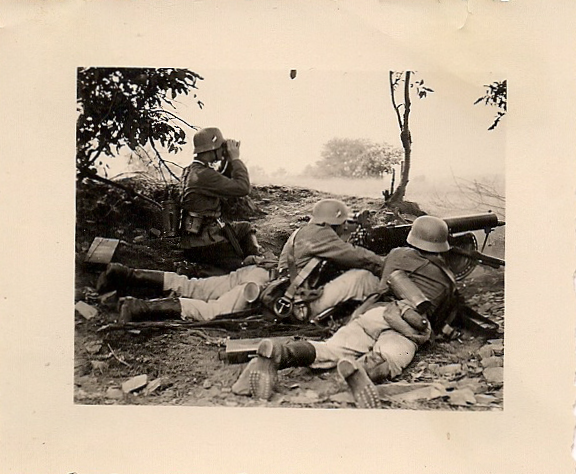
"Stahlhelm" translates to "steel helmet", however the distinctive German helmet design is commonly referred to as a Stahlhelm. |
|