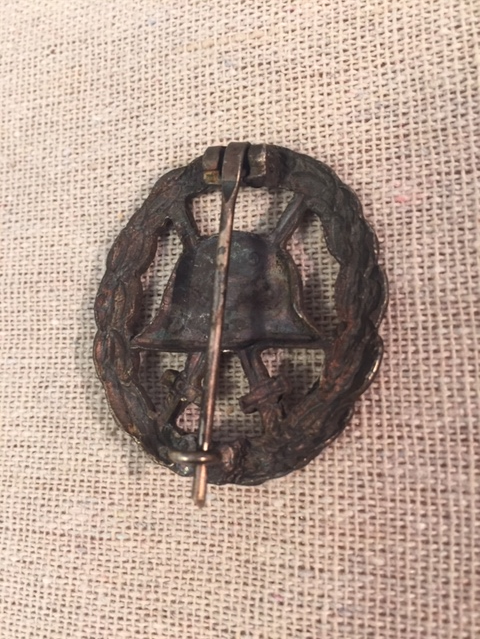
| Wound Badge (German: das Verwundetenabzeichen) was a German military award for wounded or frost-bitten soldiers of Imperial German Army in World War I, the Reichswehr between the wars, and the Wehrmacht, SS and the auxiliary service organizations during the Second World War. After March 1943, due to the increasing number of Allied bombings, it was also awarded to injured civilians. It was ultimately one of the most common of all Third Reich decorations, yet also one of the most highly prized, since it had to be "bought with blood". The badge had three versions: black (representing Iron), for those wounded once or twice by hostile action (including air raids), or frost-bitten in the line of duty; silver for being wounded three or four times, or suffering loss of a hand, foot or eye from hostile action (also partial loss of hearing), facial disfigurement or brain damage via hostile action; and in gold (which could be awarded posthumously) for five or more times wounded, total blindness, "loss of manhood", or severe brain damage via hostile action. Badges exist in pressed steel, brass and zinc, as well as some base metal privately commissioned versions. Those of the First World War were also produced in a cutout pattern. All versions of the Wound Badge were worn on the lower left breast of the uniform or tunic. The badge was worn below all other awards on the left. |